Bangkok Bucket List
It all begins with the warmth, followed by the sound, and the scent of charcoal, chili, jasmine, and exhaust fumes. This is not a city that believes in half-measures. Wats (temples) that echo with the sound of your own footsteps, frenetic markets piled high with neon-bright tropical fruit, and an almost electric nightlife that's something of a pilgrimage for food lovers - a must for anyone committed to the sensory overload of the travel experience. Subtle? Certainly not. Addictive? Absolutely.
Why Bangkok belongs on your bucket list
One of the most famous cities in the world. And it's true what they say about the food on the streets. The Pad Thai for 50 baht that you eat from a little wheelbarrow on Charoen Krung Road tastes better than the Pad Thai you paid twenty-five bucks for back in the states. It just does. And the wats! O. M. G. Hectares of gold, and ceramic tile, and colored glass gleaming in the tropical sun. And the prices! Insane. The best of everything for a quarter of the cost in Europe or America. It's like the city was designed to suck you back in. They say they're staying for four days, but they're really staying for three weeks.
When to go
The cool season runs from November to February (25-30C). Humidity is lower, there's no rain, and most travelers are in town (particularly in December and January), so book ahead. The hot season, from March to May, reaches a scorching 40C+ and hardly any rain. The wet season (June to October) sees incredibly humid months punctuated by short, tropical downpours that quickly refresh the air. The city turns a brilliant shade of green, and hotel rates are the lowest. The rainiest months are usually September and October. Songkran (mid-April) is the world's biggest water fight, with everything and everyone getting drenched.
Must-visit places in Bangkok
Grand Palace & Emerald Buddha
Gold is used excessively across everything; be it gold leaf, colored glass, or ceramic tile. The Emerald Buddha is made of jade, not emerald, though it's the most sacred Buddhist image in Thailand. People here take the formal dress code seriously; no shorts and tank tops, wear long pants, covered shoes, and closed-toe shoes. You can borrow sarongs from the entrance for free. Try to visit in the morning; after 10:00 a.m. you won't even be able to move as it gets way too crowded and hot.
Wat Pho
The reclining Buddha is massive. You won’t believe how big until you see it. But take a moment to notice the details as well. The feet are 3 meters high and 4,5 meters long and inlaid with mother-of-pearl. There are 108 signs of true knowledge on the feet and the interioer walls are painted with murals. Note the numbering on the stones outside the complex, as they fit perfectly in your hand when you walk over them. Watch out for lousy scammers offering a ten-baht scam ticket on your way to the temple.
Wat Arun
The view is perfect. Up close, the spires are impressive. They resemble ceramic seashells melded together to build a beehive. The temple was constructed in the 17th century and used as a state enemy prison. They were subsequently murdered and their ashes used to manufacture the ceramic tiles. Times have changed, right? The ferry operates until 8pm, so come and enjoy the sunset and the lights.
Chatuchak Weekend Market
Find an unbearable labyrinth of hidden wares spread before you. Climb its stairs and be led above the endless expanse of the market. Perhaps take some pots (and a coffee) if you are a tiny group. Beneath the pots sign is the solution. Kindest owners? Most enchanted items? Best locations for a poltergeist? Exquisitely perfumed? They are.
Chinatown (Yaowarat)
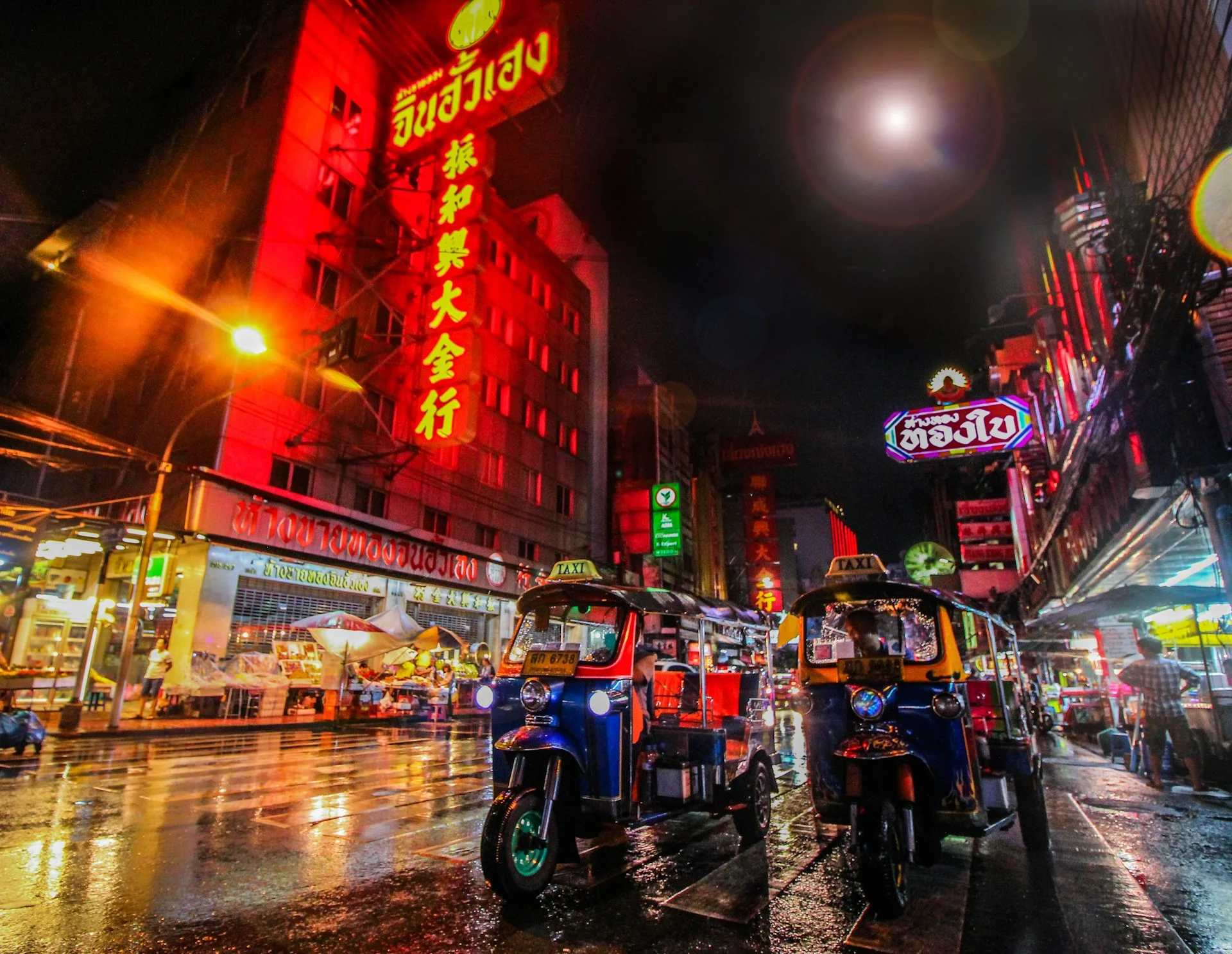
Yaowarat Road comes alive with its vibrant street food scene after sunset which is unmatched anywhere in the world. With neon lights shining brightly above, grills and woks firing up on all sides, this is an experience you will not forget. Try the roasted duck at Prachak, the crab omelette at T&K Seafood, and the mango sticky rice from any vendor as they are all fantastic. Coupled with the old shophouse designs, the gold merchants, and the temples, this is truly a scene from a book. Don’t forget your camera and your hunger!
Khao San Road
You may love or hate Khao San Road. It’s fine, during the day. By night, it’s one enormous backpacker freak show. Neon, alcohol, cross-insomniac *insert people from 30 countries here* madness. Even the pad Thai guys aren’t too bad. But if you do escape! Escape by feasting on the less-than-a-meal alleyways that branch off Khao San. Tasty, authentic Thai food at Thai-real prices. A literal stone’s throw from the backpacker hell hole.
Jay Fai
Picture yourself a septuagenarian granny, ski-goggled to shield her eyes from the searing wok flames, laboring to turn out the most iconic of all street foods. There’s a reason the world-famous crab omelet and Michelin-starred tom yum goong noodles at Jay Fai cost more than 1,000 baht. It’s exorbitant for street food anywhere else in Bangkok. But you won’t give a rat’s arse after that first mouthful. The queue — and it’s a testy one — forms well before the 2 p.m. dinner opening. You’ll need to energize both, as the wait is a thief of a pristine plate and the long street vendors of Mary knows that part of the enchantment is eating hot, new food.
Thipsamai
This restaurant has had the same menu since it opened 54 years ago: Coaxially stuffed Pad Thai, made with tamarind, fish sauce, dried shrimp, chili pepper, and sugar, and encased in a thin egg crepe. The kitchen uses shrimp oil for an added touch of smoky sweetness. The meal is so popular that even days when it's raining, you can still expect long, winding lines out the door..pad Thai still linenoodles and place on a drained open egg crepe.
Jim Thompson House
An enigmatic American silk merchant long rumored to have been a spy vanished in the Malaysian jungle in 1967. But before that, he was able to design and construct six immaculate traditional Thai houses along a small canal and fill them with exquisite art from across Southeast Asia. Take the guided tour for the full sordid tale, then poke around the lovingly restored teakwood mansions, which boast more Buddha images and rare pottery than one swinging spy can handle. The gardens are a delight.
Chao Phraya River
Skip the overpriced dinner cruises and hop onto the Chao Phraya Express Boat (only a few baht). You'll ride with Thais, the fast-moving river wind in your hair as you glide under the bridges Rama I built, past the Temple of Dawn, the Grand Palace, and the old trading houses of Chinatown. For food stalls, take the orange flag boat, blue flag if you want someone to point things out to you and narrate your ride. Try to do this as the sun sets. It's just magic with spires of temples pointing into an orange sky and the water and your skin cooling down in the evening breeze.
Bangkok insider tips
- BTS Skytrain: There is an extensive BTS (Elevated) and MRT (Underground) rail network within the city itself. The BTS won't drop you off right at every doorstep, but it's a convenient mode of transport. The MRT, being underground, is a comfortable escape from the tropical heat. Both lines cross at a station in the city center.
- Street Food Safety: If you see a long line of locals in Thailand waiting to eat somewhere, then you should definitely eat there too. The high turnover of food in popular street stalls ensures that everything is fresh and safe to eat, except for raw salad (which you shouldn’t be eating anyways) from that one not-so-popular stall.
- Tuk-Tuks: It's better to agree on a fare before you hop into a cab. They don't use meters. And if somebody tells you they want to give you a "complimentary tour", steer clear. They will bring you to gem stores and tailors and demand a commission. Use Grab, it's more convenient, with fair rates.
- Temple Etiquette: You must take off your shoes before entering a temple. Your shoulders and your knees should be covered. You should not point your feet at a Buddha. These are not suggestions. These are rules. Every time.
- Budget: Experience the local life either by visiting markets or having meals in non-touristic restaurants, will cost you around 200-300 baht per meal. Taxis complete with AC are cheap (and you won't need the AC; windows down and off you go). Best part? They are honest and fares are hardly ever above 100 baht.Restrictions apply. Subject to availability.
Save your Bangkok bucket list
Have you found any places in a Reel? Triply extracts every location and maps them out for you.
Get on the App Store