Buenos Aires Bucket List
Have you ever encountered anything like it? One moment you're spending the afternoon sipping an espresso with a medialuna in a hole-in-the-wall cafe, the next you're at a noisy street market making your way through the crowds to a leather stall. Maybe you're one in a sea of suits and ties waiting to enter a glass high-rise, or dancing the tango with someone beautiful and drenched with sweat. And all the while your senses are working overtime: smelling cigars in old San Telmo, feeling the hairs on your neck stand at the near-miss of a motorman on a 100-year-old tram, being awestruck by Teatro Colón, and sweating out every last sin in a club.
Why Buenos Aires belongs on your bucket list
Nothing in Buenos Aires occurs when it is supposed to. If you show up at 8 PM for dinner, you are going to eat alone. At 10, restaurants begin to fill up. And a milonga can last until after 3 AM on a weekday. The emotional breadth of this city is enormous, in a minute it can be the heartbreaking woe of a bandoneón’s complaint, and in the following one it can be 50,000 supporters going crazy in La Bombonera. The boulevards are from Paris, the buildings from Madrid, but the feeling is that of a true porteño: passionate, loud, and impossible to avoid. And the beef. Raised with grass, grilled on a wood fire, and cut so thick that you doubt your choices. Also, with the peso, being the peso, your cash goes crazily far.
When to go
The best time for a visit to Buenos Aires is during the spring and autumn months. During these golden weeks, temperatures are comfortable, jacarandas bloom in the parks, and you can spend your days outside and evenings strolling the boulevards. Spring (October, November, and December) is all about the purple jacarandas that bloom and spill over the streets. Autumn (March and April) brings golden leaves scattered like coins on the sidewalks. Summer (January and February) is hot and humid, with temperatures often in the 30s and heavy humidity. Many locals head to the beaches or the mountains, so the city itself is quieter, hotel prices drop, and it can be a great time to visit without the crowds. Winter (June, July, August) is milder than you might expect, with days around 15 degrees, though the wind can bite. Nights drop to around 5 degrees, and the city can feel overcast and dark early. Still, winter brings good festivals, lower steak prices, and easier access to tango shows.
Must-visit places in Buenos Aires
San Telmo Market
Sundays are special as the whole neighborhood spills into the streets for a lively spectacle. Mimes, musicians, circus performers, puppeteers, drummers, tango couples, jugglers, and street artists all set up along the fair. San Telmo turns into one big open-air party, and it's common to see people strolling with a drink in hand as they browse the stalls.
La Boca & Caminito
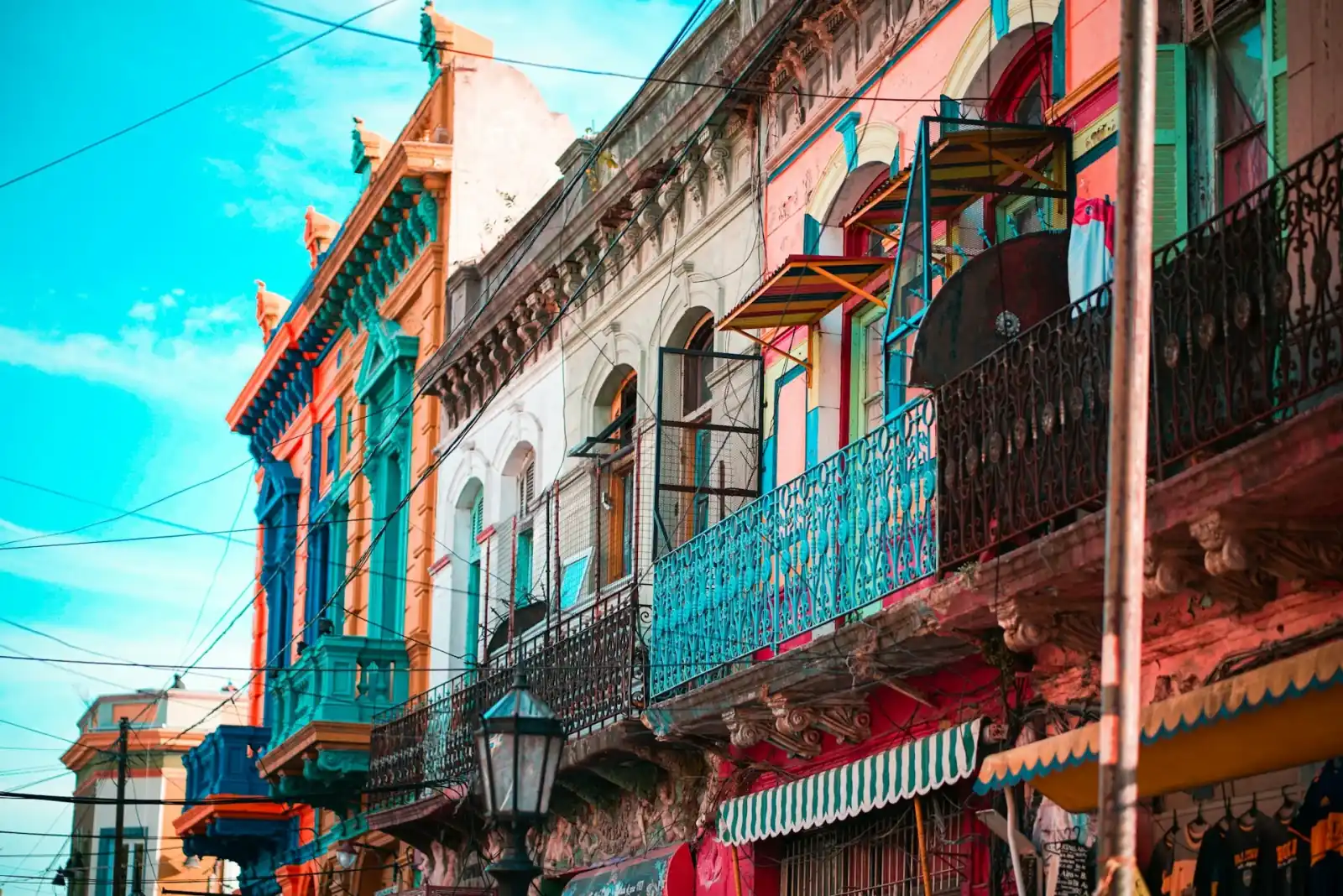
The colorful tin houses you might have seen throughout Buenos Aires? They were painted using paint left over from ships. Immigrants from Italy lived in these houses, and they were so poor they used the only paint they could get for free… ship paint. Caminito is fun, yes, it’s touristy, but it’s fun. There’s also the rough, passionate La Boca. La Bombonera stadium is located in La Boca, and it’s said to shake when Boca Juniors score. If you can manage to see a game, do so. It’s the most exhilarating sporting event you will ever attend. Just don’t walk around too much in La Boca when it’s over.
Recoleta Cemetery
Certainly no ordinary graveyard. For the dead elite, a metropolis of marble. Over 6,400 extravagantly adorned mausoleums litter the alleyways, an image of Paris in miniature, with presidents, generals, Nobel Prize champions and, of course, Evita Peron (her mausoleum is steadily littered with new blooms). You will almost surely end up staying far longer than you had intended. The swankiest part of Buenos Aires next door to it - all a schlep from the MALBA museum and overpriced caffeine bars.
Palermo Soho & Hollywood
Palermo Hollywood is the informal name for the section of Palermo Viejo along the streets of Dorrego, Costa Rica, and Fitz Roy. The legendary nickname sprang up in the early 2000s when a number of TV and radio producers set up shop en masse in the area, prompted by the low rents and picturesque setting. But while an accurate way of butchering this is to say that PH is a split personality, real estate agents and locals insist that, in fact, it really is a special vibe of its own. It has earned a reputation as being both the most Argentina of all the neighborhoods and the one with the greatest concentration of good-looking waiters.
Don Julio
Recognized as the best steakhouse in South America, if not the world, this red meat temple lives up to the hype. The ojo de bife (ribeye) and entraña (skirt steak) are exceptionally good cuts of meat, and appropriate sharing sides include grilled provoleta (provolone cheese) and creamed spinach. While you read through the 800+ selections on the wine list (1,500 bottles in total, all Argentine), you can munch on warm beef empanadas on the sidewalk. The only watch-out is the wait; without a reservation, a table happens about two hours after you arrive on line.
La Cabrera
Don Julio is elegant, understated, and refined. All of the beef is perfect. The sides are all you need to perfect slices of flame-grilled cow asado, nothing more. They know that, so it's just a simple plate of lettuce with a dash of olive oil and salt as a palate cleanser. There is the right number of bottles of Malbec. The room is hushed and plays all the Latin jazz hits you know on a playlist at the perfect volume. It's literally one of the best steakhouses in the world. It’s also right around the corner from La Cabrera in Palermo.
Plaza de Mayo & Casa Rosada
Every major event in the country's history has unfolded here: revolutions, protests, celebrations, and tragedies. The Mothers of the Disappeared have marched here for decades, and in 2001 mass demonstrations helped force the president's resignation amid economic collapse. The square remains the political heart of Argentina, an open-air stage where the nation's history continues to be written. The white paving stones marking key moments only add to its powerful atmosphere.
MALBA
Housing the largest collection of modern and contemporary Latin American art in the Americas, an angular Palermo barrio building holds art stars Kahlo, Rivera, Tarsila do Amaral and Antonio Berni, among others. Temporary shows are always at the vanguard and invariably excellent. The café overlooking the sculpture garden is a fine spot to sit and digest.
Teatro Colon
Founded in 1908, this is one of the world's five greatest opera houses. Its acoustics are legendary. The seven-storey horseshoe interior is a mad confection of gold leaf, red velvet, and fretted everything that will leave you agog whatever your theatre count. Tours run daily, but a performance is the real experience. Tickets are dirt cheap, and upper-tier seats are sometimes preferable to floor ones, at about a twentieth of the cost.
Puerto Madero
The red-brick docklands have transformed into the most modern, most glamorous barrio in Buenos Aires, the Puerto Madero district, a barrio enjoyed by joggers in the morning sun, with the still water of the docks lined with yachts, and by evening strollers. Things get most photogenic at sunset, when the parts of the bridge of womanly form (Puente de la Mujer) sexily thrust together and swivels, allow the ships to pass. Meanwhile, not a ten-minute taxi ride away is a 865-acre wild wetlands, cushioned from the riverbank amid tumbledown shacks and old artisans’ workshops, and now-inevitably elegant Costanera Sur Ecological Reserve.
Buenos Aires insider tips
- Money: This is a complex issue, and it varies constantly. The parallel exchange rate known as the “blue dollar” will give you a lot more for your money. But check the latest developments before you leave and plan to bring some US dollars in cash. Western Union transfers are also widely used.
- Eating schedule: Lunch: 12:30-3 PM. Dinner: not before 9 PM. With many places not even opening their doors until 8, if you happen to show up at 7, tough cookies, you'll be eating in a desert. Either adapt to that or open your wallet and order room service.
- Tango: Avoid the costly, tourist-focused dinner and tango shows in Buenos Aires. Instead, experience the real deal at a milonga, or tango dance hall. La Catedral in Almagro and Salon Canning in Palermo are good options. Most milongas have a mix of beginner, intermediate, and expert dancers, and many of these dance halls offer lessons for the uninitiated before the pros hit the floor.
- Transportation: The subway is efficient and cheap, but it closes early. You can get Ubers, and sometimes the driver will request you sit in the front and pay with cash. Taxis are everywhere; request a Radio Taxi.
- Malbec: You can find wine ridiculously cheap in Argentina. You can get a bottle from a convenience store for a few dollars that would be ten times that amount in other places. For a bar-type experience with wine, check out Pain et Vin in Palermo or Aldo's in San Telmo.
- Safety: It is generally safe for a big city. However, watch out for pickpockets in touristy areas, don't show your phone, and avoid walking around at night; use Uber or Radio Taxis instead.
Save your Buenos Aires bucket list
Find locations in a video. Triply recognizes each place and generates a map for you. Then turn those saves into a day-by-day itinerary with flights, hotels, and friends, all in the same app.
Get on the App Store